
DEEP DIVE
Systems Thinking
The diagram nobody
thought to draw
A month of cross-functional stakeholder interviews mapped into a single lead flow diagram the CMO adopted as the team's standing reference. Making an invisible process visible.
Company
AdvancedMD
Year
2013 to 2014
Discipline
Systems mapping, stakeholder research
The problem
No one person knew the whole story
During a Marketo integration project I ran into a problem that stopped me from doing my job cleanly. Leads were moving through a system that nobody had fully mapped. Marketing owned the top of the funnel. Sales owned the handoff and close. External paid lead vendors fed the database from the outside. IT managed the infrastructure connecting everything. And the NetSuite database team owned lead hygiene and integrity, making sure the data moving through the system was clean and trustworthy enough to act on.
Each team understood their own piece and assumed someone else understood the rest. Nobody did.
I could have worked around it. Most people did. Instead I spent a month interviewing every one of those teams, from the moment a lead entered the system to the moment it became a closed account. I was not asked to do this. I did it because I could not build something reliable on top of a process I did not understand.
The decision
Build the map nobody had built
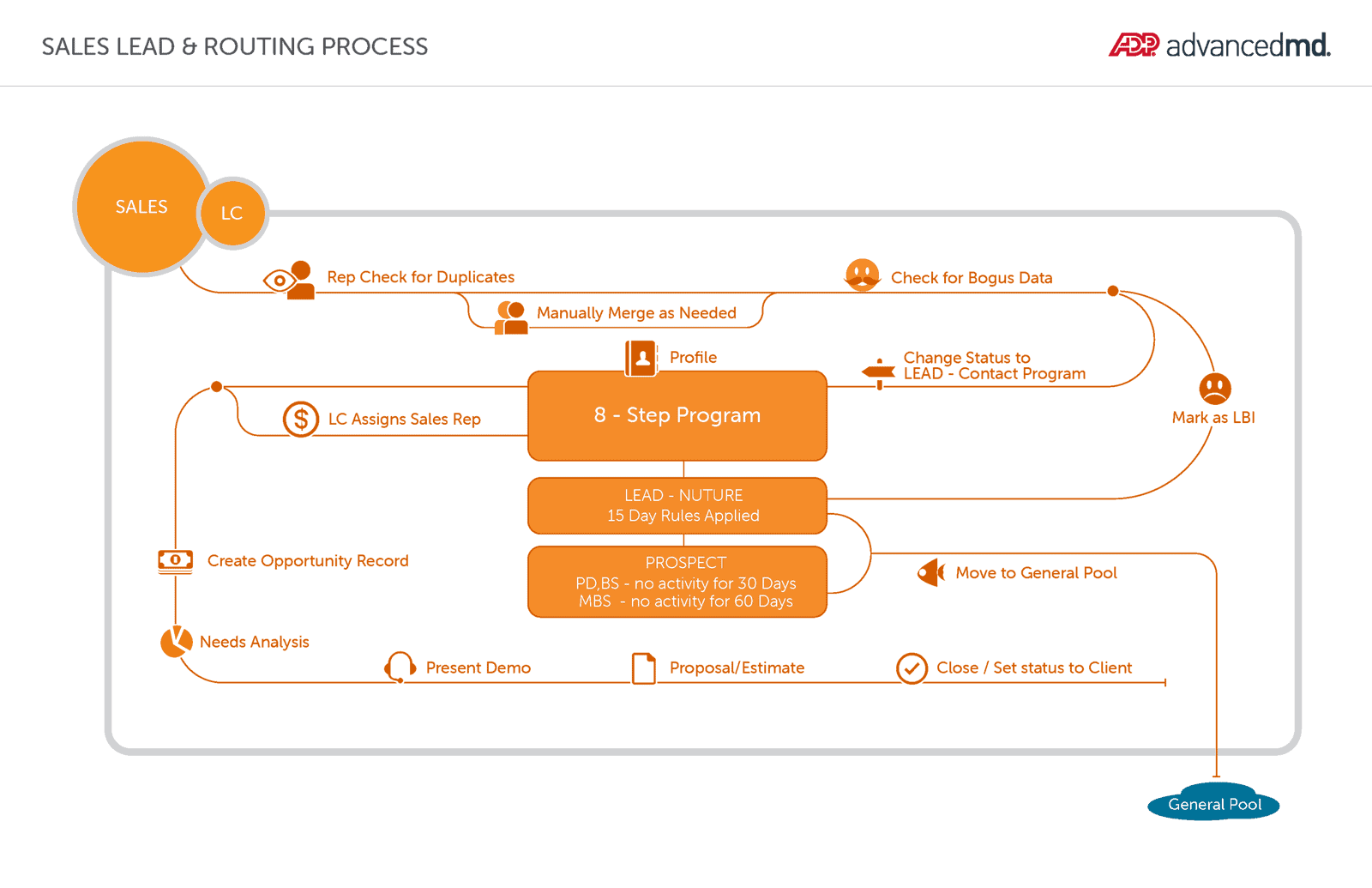
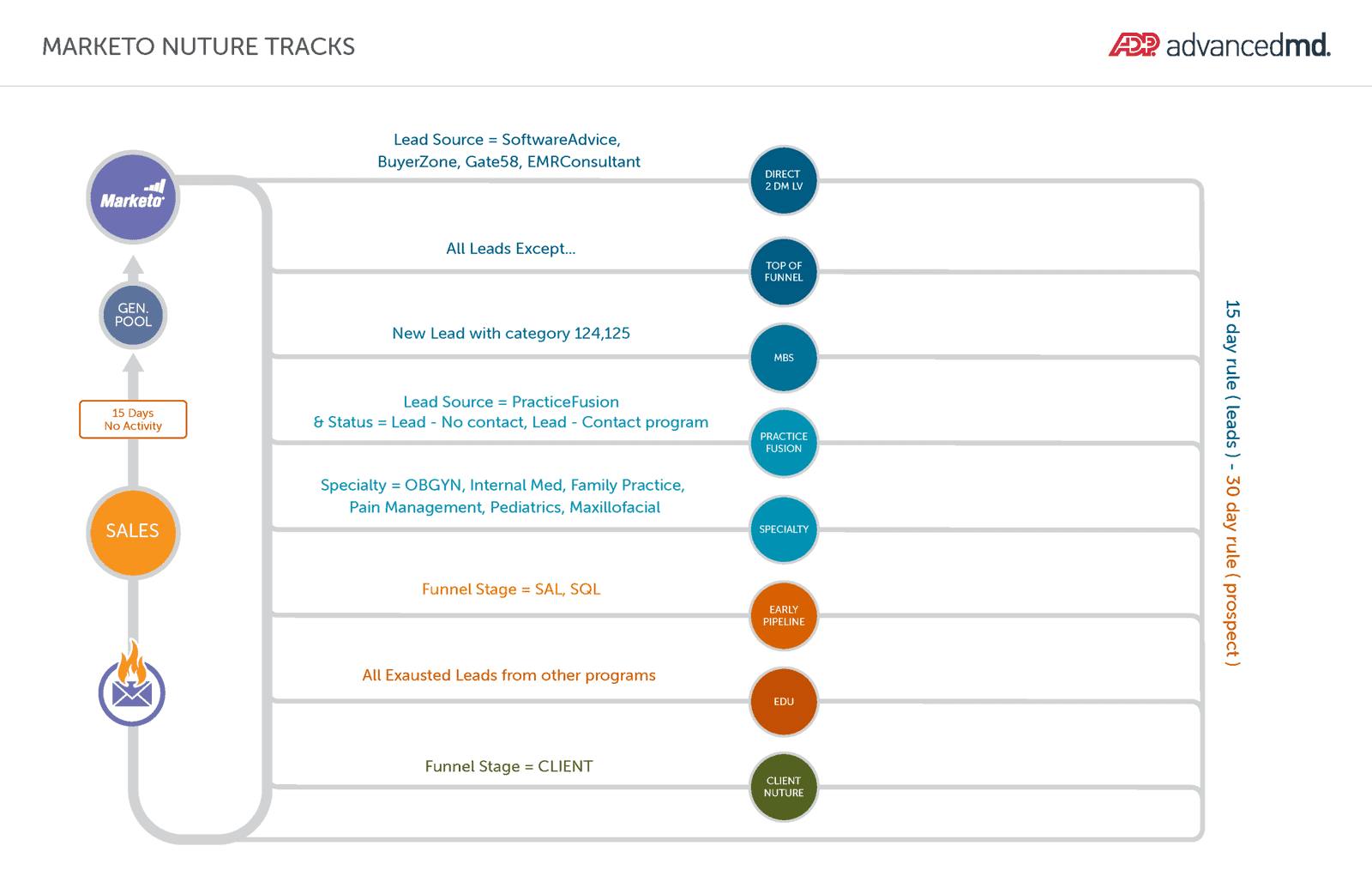
The result was a single diagram tracing the complete lead journey. Paid sources, lead vendors, form imports, the database, nurture programs, Marketo routing, sales handoff, closed accounts. Every node. Every path. Every place where a lead could get lost or slow down.
What made it useful was not the visual design. It was the fact that it was complete. For the first time, someone had talked to everyone and put it all in one place. The diagram did not just show where leads went. It showed where the system had gaps, where handoffs were unclear, and where different teams had been operating on different assumptions about the same process.
The problem
No one person knew the whole story
During a Marketo integration project I ran into a problem that stopped me from doing my job cleanly. Leads were moving through a system that nobody had fully mapped. Marketing owned the top of the funnel. Sales owned the handoff and close. External paid lead vendors fed the database from the outside. IT managed the infrastructure connecting everything. And the NetSuite database team owned lead hygiene and integrity, making sure the data moving through the system was clean and trustworthy enough to act on.
Each team understood their own piece and assumed someone else understood the rest. Nobody did.
I could have worked around it. Most people did. Instead I spent a month interviewing every one of those teams, from the moment a lead entered the system to the moment it became a closed account. I was not asked to do this. I did it because I could not build something reliable on top of a process I did not understand.
The diagram
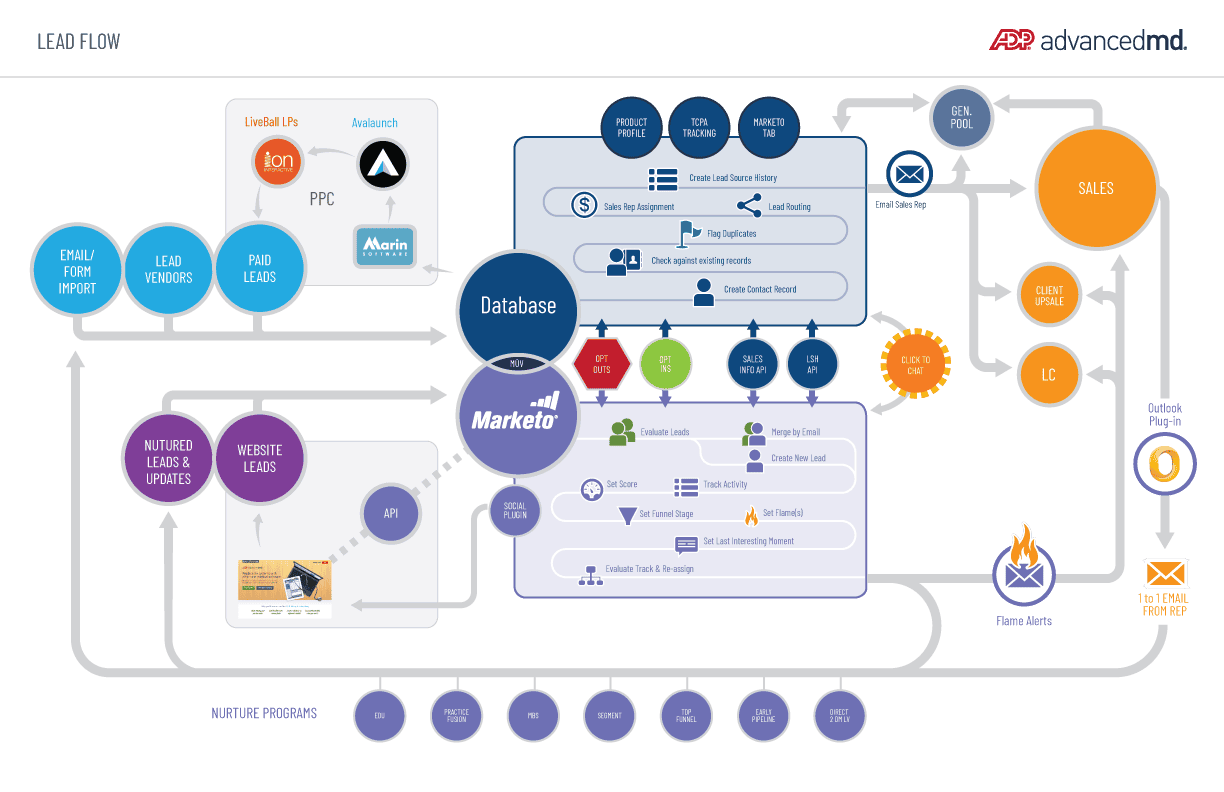
The complete lead journey, from paid traffic and lead vendors through the NetSuite database, Marketo nurture programs, and sales handoff to closed account. Built from a month of cross-team stakeholder interviews.
The outcome
The CMO called it the Chocolate Factory
When I presented the diagram the CMO's response was immediate. He said it reminded him of Charlie and the Chocolate Factory, a complex, intricate system made visible and navigable for the first time. He adopted it as an executive reference document. Leaders across the business used it to understand where leads would go and how to find flaws in the overall plan.
When I left AdvancedMD he made sure future designers had access to the file so it could be updated as the system evolved. The work outlasted me. That is the outcome worth documenting.
What I learned
Systems thinking is a design skill
A less experienced designer would have asked for existing documentation and worked from that. I had learned by then that the most useful thing you can sometimes do is create the documentation that does not exist yet. Understanding the system completely is not preparation for the design work. It is the design work.
The other thing this project confirmed is that the most valuable design problems are rarely the ones you are assigned. They are the ones you notice on the way to something else.